

Dangerous Skincare Ingredients You Apply Daily
A measured look at the everyday ingredients that regulators, dermatologists and researchers have flagged, and what the evidence does and does not show.
Dangerous skincare ingredients you apply daily is a phrase that tends to provoke alarm, yet the reality is more nuanced than most headlines suggest. Cleansers, moisturizers, sunscreens and serums are used repeatedly, often for years, so even a small irritant or contaminant can matter more than it would in an occasional product. Whether an ingredient is harmful depends on its concentration, the type of product, how long it stays on the skin and the individual using it. This article reviews widely discussed ingredient categories, summarizes what regulators and medical organizations have said about them, and points out where the evidence remains unsettled.
Skincare Ingredient Safety and Regulation

Understanding which ingredients deserve concern starts with understanding how cosmetics are overseen. In the United States, the Food and Drug Administration does not approve cosmetic products before they go on sale, with the exception of color additives. Companies are responsible for the safety of their products, and the agency can act when problems emerge. The Modernization of Cosmetics Regulation Act of 2022 expanded the FDA’s authority, adding requirements such as facility registration, product listing, safety substantiation and reporting of serious adverse events.
The European Union takes a different approach, maintaining lists of substances that are prohibited in cosmetics and others that are restricted by concentration or product type. As a result, an ingredient allowed in one market may be limited or banned in another, which does not by itself settle the scientific question but does show that regulators weigh the evidence differently.
A useful distinction runs through the rest of this discussion. A hazard is the potential of a substance to cause harm, while risk depends on exposure. An ingredient that is hazardous at high doses or through inhalation may pose little concern at the low levels found in a rinse-off product, and the reverse can also be true for people with allergies. Labels such as “natural” or “clean” are not regulated safety standards, and plant-derived ingredients can be potent allergens.
Context box: hazard versus risk
An ingredient being listed in a scientific or regulatory discussion does not automatically mean a product containing it is unsafe. Concentration, frequency of use, skin condition and individual sensitivity all shape the outcome. This article is general information, not medical advice.
Fragrance and Essential Oils
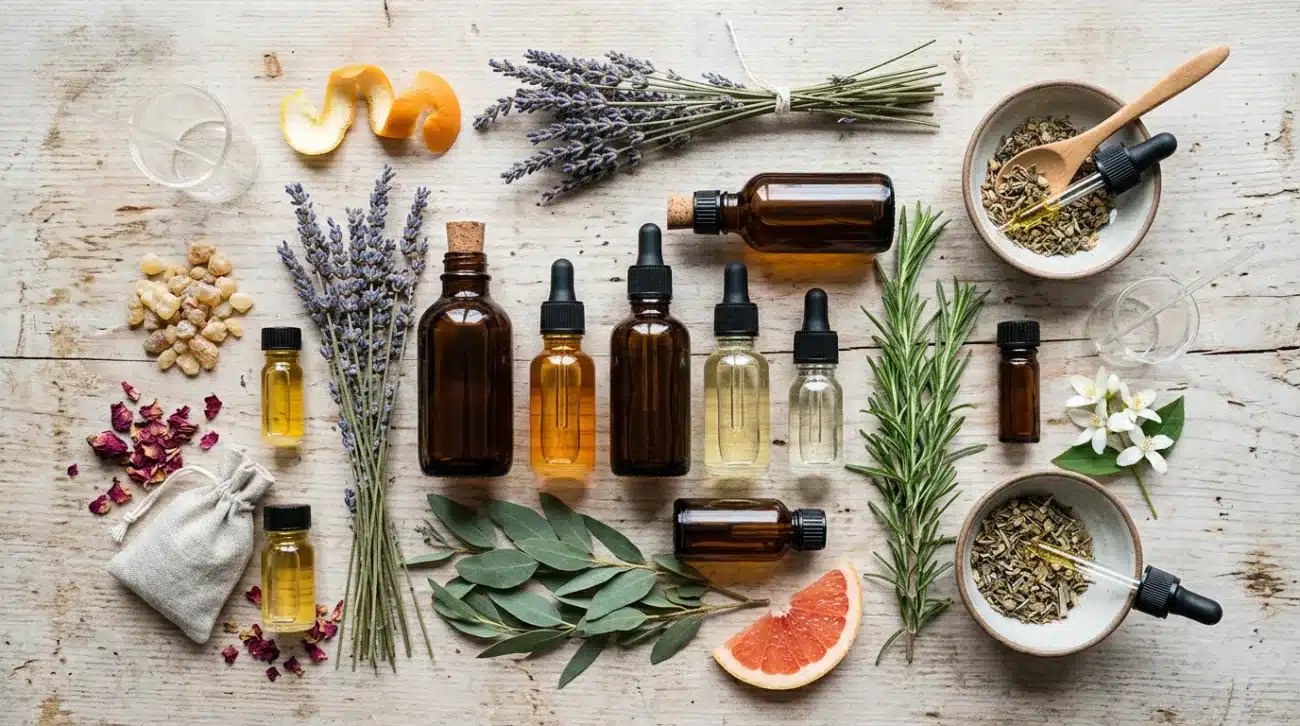
Fragrance is one of the most frequently discussed triggers of skin reactions to cosmetics. On an ingredient list, the single word “fragrance” or “parfum” can stand for a blend of many individual components, and in the United States companies are generally not required to disclose each one because formulas are treated as trade secrets. For a person with a fragrance allergy, that lack of detail makes it hard to identify the exact trigger. Dermatology sources commonly identify fragrance as a leading cause of allergic contact dermatitis linked to personal care products.
The European Union requires certain recognized fragrance allergens to be listed individually when they exceed set thresholds, which gives consumers there somewhat more information. Essential oils are often perceived as gentler alternatives, but they are also complex mixtures of aromatic compounds. Tea tree oil that has oxidized with age has been identified as a contact allergen, and some citrus-derived oils can make skin more reactive to sunlight.
Terminology adds confusion. A product labeled “unscented” may still contain a masking fragrance to neutralize odor, whereas “fragrance-free” indicates no fragrance has been added. People with sensitive or reactive skin are often advised by dermatologists to look for the latter and to check the full ingredient list rather than relying on front-label claims.
Preservatives in Skincare
Water-based products need preservatives to prevent the growth of bacteria and mold, so removing preservatives altogether can create its own safety problem. The concern is therefore not preservation itself but which preservatives are used and how skin responds to them. Two groups receive particular attention in the dermatology literature.
Formaldehyde releasers, such as DMDM hydantoin, quaternium-15, imidazolidinyl urea and diazolidinyl urea, slowly release small amounts of formaldehyde to keep products free of microbes. Formaldehyde is classified as a human carcinogen by the International Agency for Research on Cancer, but that classification is largely tied to inhalation exposure in occupational settings. In skincare, the better-documented issue is allergic contact dermatitis in sensitized people, although the question of cumulative exposure from multiple products continues to be discussed.
Methylisothiazolinone, a preservative used in both rinse-off and leave-on products, drew attention after a rise in allergic reactions. The American Contact Dermatitis Society named it Allergen of the Year in 2013, and the European Union later prohibited its use in leave-on cosmetics. Because preservative allergies can develop after repeated exposure, a product that was tolerated for months can become a problem later.
Parabens and the Safety Debate

Parabens are among the most widely used and most widely debated preservatives. Laboratory studies have found that some parabens show weak estrogen-like activity, which fueled public concern about hormone disruption and a possible link to breast cancer. Detection of parabens in human tissue samples has also been reported, but detection alone does not demonstrate that they cause disease.
The FDA has stated that it has no evidence that parabens in cosmetics affect human health, while indicating that it continues to review the available science. The European Union has taken a more precautionary position, setting maximum concentrations for some parabens and prohibiting others. Allergic reactions to parabens on intact skin are considered relatively uncommon compared with some other preservatives.
This is a case where the label of “dangerous” is contested rather than established. Many manufacturers have moved to paraben-free formulations in response to consumer demand, but that shift reflects market preference as much as a settled scientific conclusion, and the replacement preservatives carry their own considerations.
Sunscreen Ingredients

Sunscreen is an unusual entry in any list of worrisome products, because its benefits are well documented. Sun protection is recommended by dermatology organizations as a way to lower the risk of skin cancer and photoaging. Even so, specific sunscreen ingredients have been scrutinized.
In 2019 the FDA proposed rules that asked for more safety data on several chemical sunscreen filters, including oxybenzone. Agency-backed studies had found that some active ingredients are absorbed into the bloodstream after application, and the FDA emphasized that absorption does not mean an ingredient is unsafe, only that further data were needed. Separately, Hawaii enacted restrictions on selling sunscreens containing oxybenzone and octinoxate, citing concerns about coral reefs. Those laws concern environmental effects and do not represent a finding of harm to human skin.
A different issue arose when independent testing and subsequent recalls found benzene, a known carcinogen, in some sunscreens and other products. Benzene is not an intended ingredient but a contaminant, which highlights manufacturing quality as a distinct category of concern. Mineral filters such as zinc oxide and titanium dioxide are commonly suggested by dermatology groups as an alternative for people who prefer to avoid chemical filters, though the key message remains that using sunscreen is better than skipping it.


